

Best Career Paths in Artificial Intelligence: A Complete Guide to High-Growth AI Careers!
Artificial Intelligence (AI) has become one of the most transformative forces of the modern era. What once existed only in science fiction is now deeply embedded in everyday life—powering smartphones, online shopping recommendations, healthcare diagnostics, self-driving cars, fraud detection systems, and intelligent virtual assistants. As organizations across the globe race to adopt AI-driven technologies, the demand for skilled professionals in this field has reached unprecedented levels.
Choosing the right career path in Artificial Intelligence can open doors to high-paying jobs, global opportunities, and long-term career security. However, AI is not a single job role—it is an ecosystem of diverse career options that suit different interests, skills, and educational backgrounds.
This comprehensive article explores the best career paths in Artificial Intelligence, explaining job roles, responsibilities, required skills, salaries, industries, and prospects.
Understanding Artificial Intelligence as a Career Field
Artificial Intelligence is a branch of computer science that focuses on creating systems capable of performing tasks that normally require human intelligence. These tasks include learning, reasoning, problem-solving, language understanding, visual perception, and decision-making.
AI as a career is multidisciplinary, combining:
-
Computer Science
-
Mathematics and Statistics
-
Data Science
-
Cognitive Science
-
Engineering
This interdisciplinary nature is what makes AI careers so versatile and attractive.
Why Choose a Career in Artificial Intelligence?
Before exploring individual roles, it is important to understand why AI is considered one of the best career choices today.
Key Reasons AI Careers Are in High Demand
1. Explosive Industry Growth
AI adoption is accelerating across sectors such as healthcare, finance, manufacturing, retail, education, and defense.
2. High Salary Potential
AI professionals earn significantly higher salaries compared to traditional IT roles.
3. Global Relevance
AI skills are universally applicable, enabling international and remote job opportunities.
4. Continuous Innovation
AI careers involve cutting-edge research, problem-solving, and innovation.
5. Future-Proof Employment
While automation may replace some jobs, AI creates more advanced and specialized roles.
Core Skills Required for AI Careers
Regardless of the specific role, certain foundational skills are essential for success in AI.
Technical Skills
-
Programming (Python, Java, R, C++)
-
Mathematics (Linear Algebra, Probability, Statistics)
-
Machine Learning Algorithms
-
Data Analysis and Visualization
-
Cloud Computing
-
Databases and Big Data Technologies
Soft Skills
-
Analytical thinking
-
Problem-solving
-
Creativity
-
Communication
-
Ethical decision-making
Best Career Paths in Artificial Intelligence
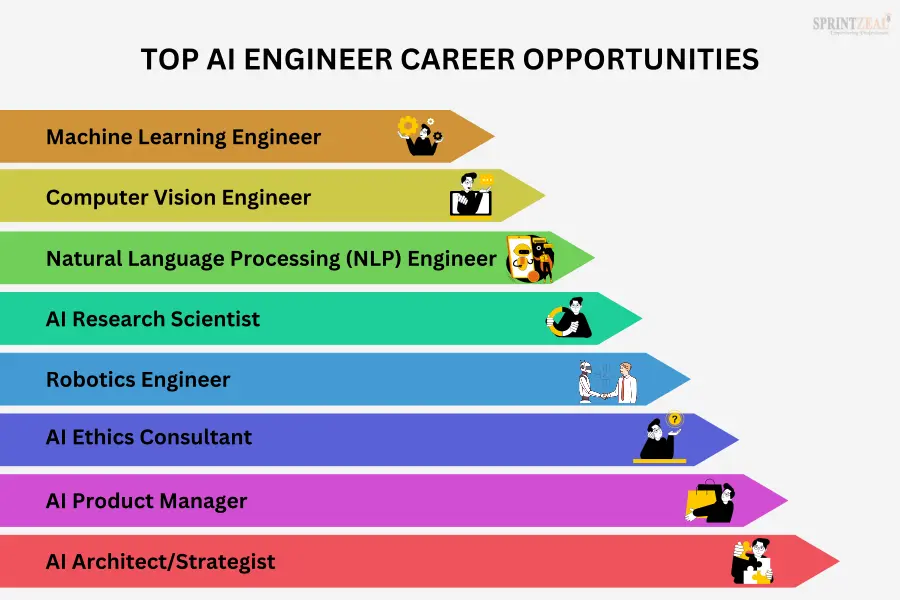
AI offers a wide range of career options. Below are the most popular and high-growth AI career paths.
1. Artificial Intelligence Engineer
AI Engineers design, develop, and deploy AI-based systems and applications.
Key Responsibilities
-
Building AI models and algorithms
-
Developing intelligent applications
-
Integrating AI into existing systems
-
Optimizing model performance
Skills Required
-
Python, Java, and C++
-
Machine Learning and Deep Learning
-
Cloud platforms
-
Software engineering principles
Salary Outlook
-
Entry Level: ₹6–10 LPA
-
Experienced: ₹20–40 LPA
AI Engineers are in demand across tech companies, startups, and research labs.
2. Machine Learning Engineer
Machine Learning Engineers specialize in developing systems that learn from data.
Job Responsibilities
-
Designing ML models
-
Training and testing algorithms
-
Handling large datasets
-
Improving model accuracy
Skills Required
-
Python, R
-
TensorFlow, PyTorch
-
Data Structures
-
Statistics
Industries Hiring
-
IT and Software
-
Banking and Finance
-
Healthcare
-
E-commerce
3. Data Scientist
Data Scientists analyze large datasets to extract meaningful insights using AI and ML techniques.
Key Responsibilities
-
Data collection and cleaning
-
Predictive modeling
-
Data visualization
-
Business decision support
Skills Required
-
Python, R, SQL
-
Statistics
-
Machine Learning
-
Visualization tools
Salary Range
-
₹8–15 LPA for freshers
-
₹25+ LPA for experienced professionals
4. Deep Learning Engineer
Deep Learning Engineers work with neural networks that mimic the human brain.
Key Responsibilities
-
Designing neural network architectures
-
Working on image and speech recognition
-
Optimizing deep learning models
Skills Required
-
Neural Networks
-
TensorFlow, PyTorch
-
GPU computing
-
Advanced mathematics
This role is common in computer vision and speech processing domains.
5. Natural Language Processing (NLP) Engineer
NLP Engineers focus on enabling machines to understand and process human language.
Applications
-
Chatbots
-
Voice assistants
-
Translation systems
-
Sentiment analysis
Skills Required
-
Linguistics basics
-
Python
-
NLP libraries
-
Machine Learning
NLP professionals are in demand in media, customer support, and AI product companies.
6. Computer Vision Engineer
Computer Vision Engineers enable machines to interpret visual data.
Applications
-
Facial recognition
-
Autonomous vehicles
-
Medical imaging
-
Surveillance systems
Skills Required
-
Image processing
-
Deep Learning
-
OpenCV
-
Mathematics
7. Robotics Engineer
Robotics Engineers combine AI with mechanical and electrical systems.
Responsibilities
-
Designing intelligent robots
-
Automation systems
-
Industrial robotics
Industries
-
Manufacturing
-
Defense
-
Space research
-
Healthcare
8. AI Research Scientist
AI Research Scientists focus on advancing AI technologies through research.
Key Responsibilities
-
Developing new algorithms
-
Publishing research papers
-
Experimenting with AI models
Skills Required
-
Strong mathematics
-
Research methodology
-
Programming
-
Problem-solving
This role is common in academic institutions and research labs.
9. AI Product Manager
AI Product Managers bridge the gap between technical teams and business goals.
Responsibilities
-
Defining AI product strategy
-
Managing AI projects
-
Market analysis
-
Stakeholder communication
Skills Required
-
AI fundamentals
-
Business strategy
-
Communication
-
Leadership
10. AI Ethics Specialist
With AI’s growing influence, ethical considerations are becoming critical.
Responsibilities
-
Ensuring responsible AI usage
-
Bias detection and mitigation
-
Regulatory compliance
Skills Required
-
Ethics
-
Law and policy
-
AI fundamentals
-
Risk assessment
This role is growing rapidly as governments introduce AI regulations.
Industries Hiring AI Professionals
AI professionals are required in nearly every industry:
-
Information Technology
-
Healthcare
-
Banking and Finance
-
Automotive
-
E-commerce
-
Education
-
Media and Entertainment
-
Defense and Aerospace
Top Companies Hiring AI Professionals
Some of the major global and Indian companies hiring AI talent include:
-
Google
-
Microsoft
-
Amazon
-
IBM
-
Infosys
-
Tata Consultancy Services
Salary Growth and Career Progression in AI
AI professionals experience rapid career growth due to skill scarcity.
Typical Career Progression
-
Junior AI Engineer
-
AI Engineer
-
Senior AI Engineer
-
AI Architect
-
Chief AI Officer
With experience, professionals can move into leadership, consulting, or entrepreneurship.
Future Scope of AI Careers
AI is expected to play a central role in the future economy.
Emerging AI Trends
-
Generative AI
-
Autonomous systems
-
AI in healthcare diagnostics
-
Smart cities
-
AI-powered education
-
Cybersecurity automation
These trends will create new career roles and specializations.
How to Choose the Right AI Career Path
Students and professionals should consider:
-
Interest in coding, data, or research
-
Strength in mathematics and logic
-
Industry preferences
-
Long-term career goals
Hands-on projects, internships, and certifications can help in making informed choices.
Conclusion
Artificial Intelligence offers some of the best career paths in today’s job market, combining innovation, high salaries, and long-term stability. From AI Engineers and Data Scientists to Ethics Specialists and Product Managers, AI provides diverse roles catering to different skills and interests.
As AI continues to evolve, professionals who invest in learning, adaptability, and ethical responsibility will lead the future workforce. Choosing a career in Artificial Intelligence is not just a job decision—it is a step toward shaping the future of technology and society.